Cup Rim
Traditionally, symbols near the rim are read as the present or very near future, often days or weeks.
Marks & Letters
A shape that reads as a letter points to a person whose name begins with it. Near the handle it is someone already close to you. Letters are a very old part of cup reading, so turn the cup around to see which letter you find. A letter near the rim is someone you will meet or hear from soon, and one beside a heart is love. It can also be the first letter of a place. Two letters side by side are often read as a couple or two names linked by the same matter, so look at what lies between them.
Spotted this sign in your own cup? Get your coffee cup read
Coffee cup reading, often called tasseography, grew through Turkish, Balkan, Greek and Middle Eastern coffee traditions. Readers look at the shapes left by the grounds, where they sit in the cup and which signs appear beside them. Meanings vary between regions and families, so this guide presents traditional interpretations as folklore and reflection, not certain predictions.
Where a symbol sits in your cup changes how it is read, because each area of the cup stands for a different part of your life and a different timeframe.
Traditionally, symbols near the rim are read as the present or very near future, often days or weeks.
In many traditions the middle section is linked with the coming months and medium-term developments.
Symbols at the bottom are traditionally read as the more distant future or deeper, slower matters.
A question mark in coffee grounds signals an unresolved matter, information still to come, or an important crossroads where things are not yet clear.
A plus sign in coffee grounds stands for positive additions: growing resources and helpful alliances coming into your life.
A minus sign in a coffee reading indicates shedding burdens: cutting back on purpose and letting go, at the right time, of obligations you no longer need.
A cross mark in your coffee cup signifies a definite ending, an agreed boundary, or a firm decision already made.
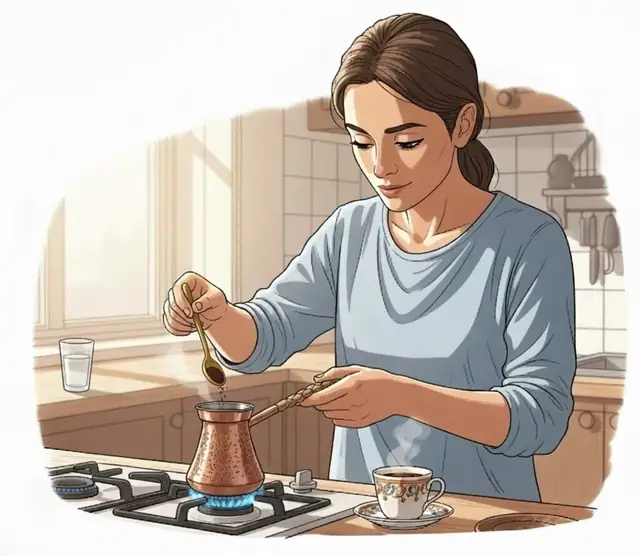
Follow the traditional Turkish coffee preparation method
Read moreTake a photo of your coffee cup and get a personal interpretation of the symbols that show up in your own grounds.